Japan- Kobe and Miki City
We are making plans for our next trip to Japan in the fall of 2020. We are super excited about some of the things we are lining up for that trip. I've been looking at the photos and reflecting about our trip last spring. I’ve put together a few more entries that I’ll post here soon which will be my reminiscing from that trip.
We left off in the last post leaving Gifu City for Kobe. Our plan was to meet up with my old friend Hidehiro and go to the Takenaka Carpentry Tools Museum. Hidehiro is a nature photographer whose work focuses on the northern boreal forests of North America. I first met him maybe 10 years ago when he attended one of my crooked knife classes at the Winter Camping Symposium in Minnesota. Then a few years later he stayed with me and built a traditional wooden toboggan. We’ve been in contact every few years since and he stops by to say hi when he’s traveling through the area for his photography work.

Meeting up with Hidehiro Otake for lunch.
Hidehiro’s website is here and his Instagram is here. Hidehiro invited us to stay with him and his family for a night. He and his wife prepared the most amazing dinner for us. It was one of the best meals we had on this trip.
The Takenaka Carpentry Tools Museum is a must visit if you are interested in Japanese woodworking and are in Japan. There’s simply too much there to show here. But we did meet a staff member that Masashi knew who was a retired temple carpenter. He showed off some of his tools and wagatabon he had made after Shinichi Moriguchi taught a class there earlier in the year. I forgot his name, but he had some insight into the curved chouna handles I’ve been fascinated by.


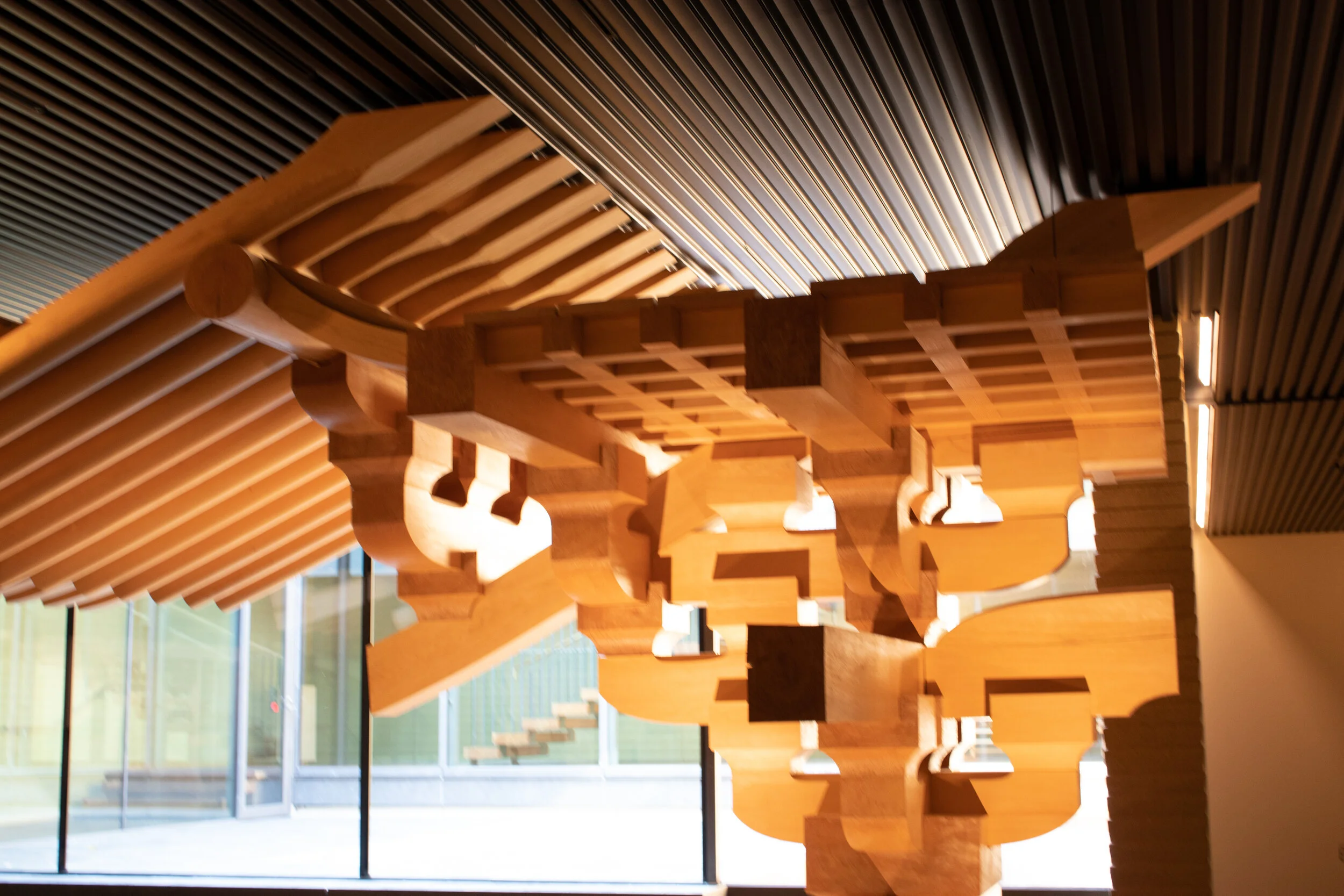
The rumor is that the handles were grown in a curved shape. Although I believe some may well have been. I think that the amount of adzes in use during the Meiji restoration period were likely in the 10’s of thousands. Growing them seems almost an impossibility. Many of the adze handles I’ve studied, although only maybe 30-40, show signs of bending stresses. I was happy to see a video that was playing at the museum showing how the adze handles were boiled in water and bent. Since then I’ve been bending handles from various species with great success. Drying them in heat for over a year sets the shape.


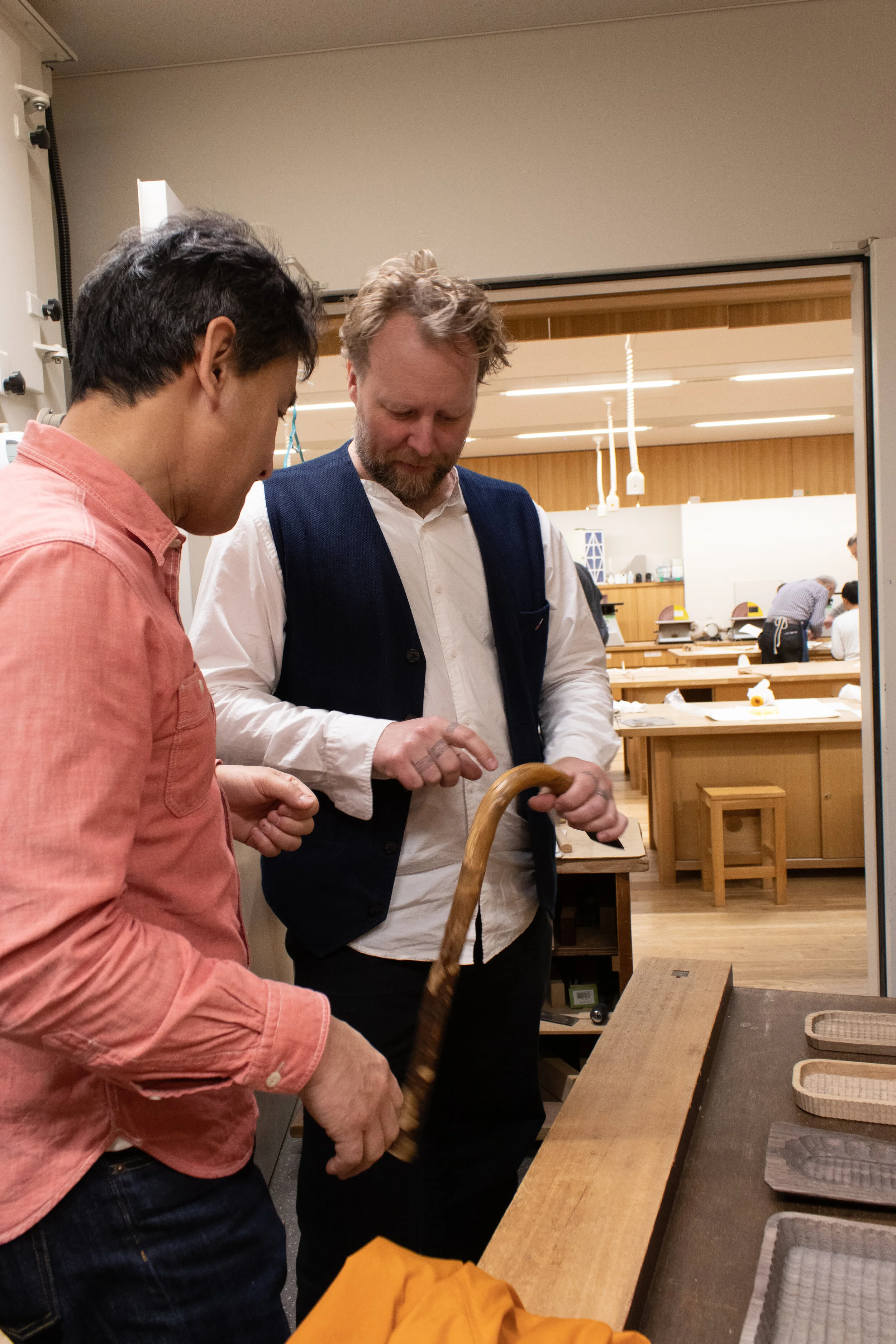


The next day we all left Kobe and traveled to Miki City. Masashi arranged for us to visit a renowned chair maker named Toshio Tokunaga. Tokunaga makes and designs beautiful chairs that are finished with kanna, Japanese hand planes. We toured his shop and he told us the story of how an old plane blade maker influenced his work using the hand planed finish. Tokunaga also produces a finish called liquid glass.

I’ve been trying to find out more about this finish, as it’s fairly new technology. It’s completely inert and food safe and made from very small silica particles. It is used on furniture and also woodenware. The finish is matte and looks as if nothing is on the wood. I’m still trying to get clear information on just what exactly it is and how it works. There was a big study in Gifu a few years back comparing the products of all the different manufacturers of liquid glass on woodenware and furniture. Sadly it’s only in Japanese. The quality of liquid glass products I’ve found available outside of Japan are not very good and are still in their development stages. Please check out Tokunaga’s website here and read this article about him at Core 77. Tokunaga also trains apprentices and he accepts foreigners too. I’m very thankful to him for accepting us as guests and sharing what he did with us.

After leaving Tokunaga’s place we found some ramen for lunch and then visited a tool manufacturer called Kanzawa. They make the small kanna blades for Tokunaga among many other things. Miki City is one of Japan’s biggest tool manufacturing areas. Every year there is a huge tool festival there. Some day I hope to attend and buy some tools.


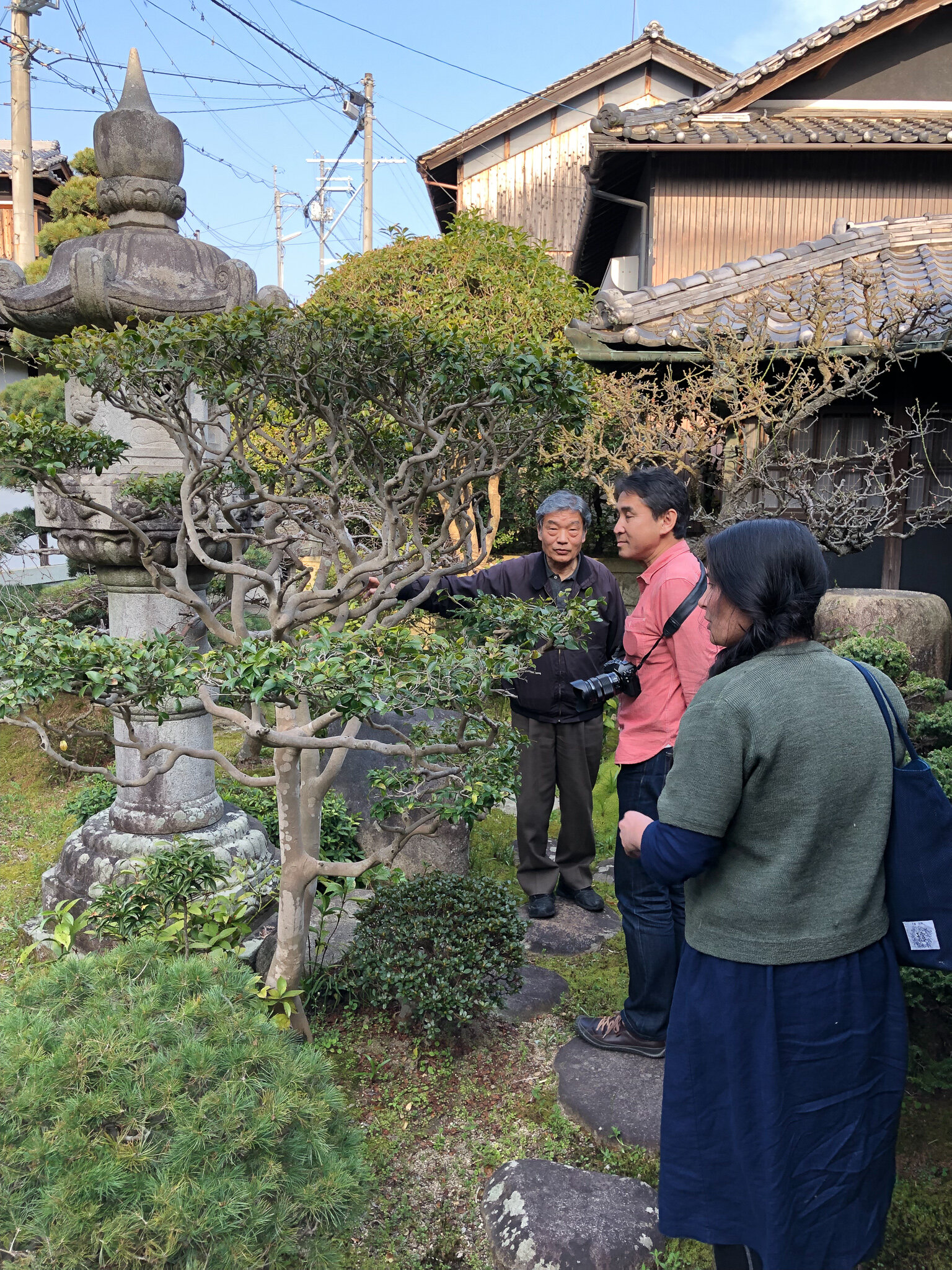
We also visited a 3rd or 4th (I can’t remember) generation tool merchant. I was looking to buy a set of chisels and a small hand plane. The owner tended to us and brought out various tools with various levels of qualities for me to choose from. He was very welcoming and shared his family’s story with a tour of his family’s old house which was next door to the shop. The house was kept up as a historic home and wasn’t occupied any longer. This was a great example of the wealthy merchant’s house from an earlier era of Japan. He also tended an amazing garden in the front courtyard.



We left Miki city and Masashi dropped us off in Kyoto on his way home. We spent a few enjoyable days there, visited a few craftspeople and went on to Takayama, a mountain town North of Gifu City. I’ll be posting about that trip next.