If you have just one day in Tokyo
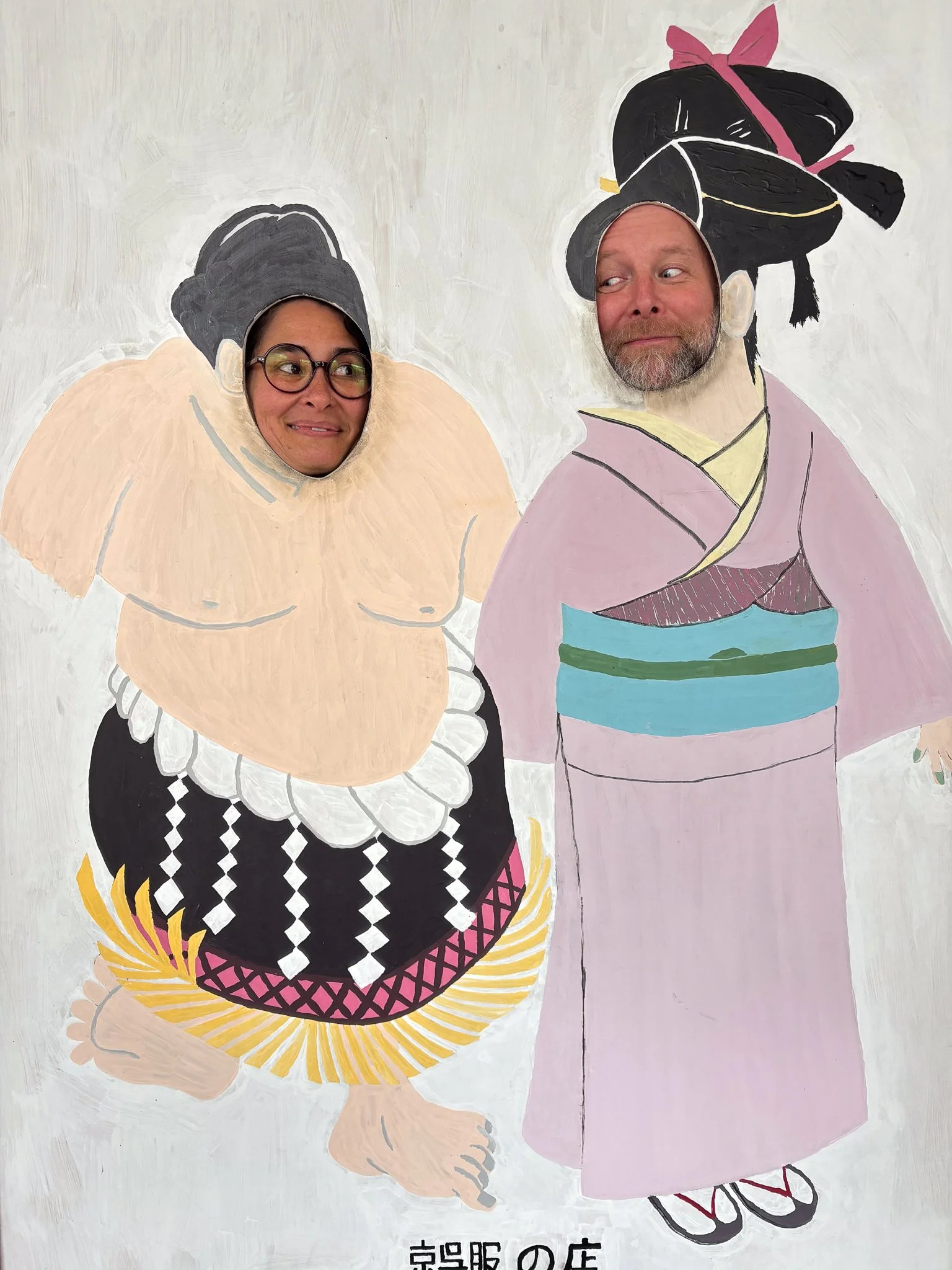
The Adventures of Jazmin & Jarrod Continue, or Japan Take Three May, 2025
Jarrod & I went to Japan in May, 2025 for the third time. There were a lot of textile gems to share from that trip, but this post is about what you should do if you have just one day in Tokyo.
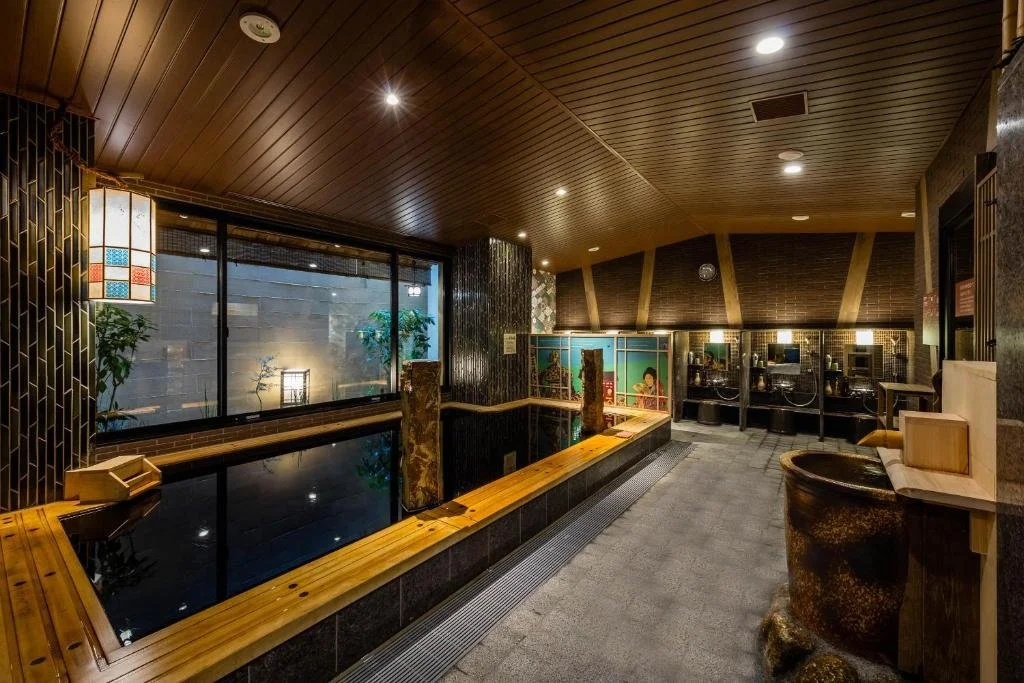
Onyado Nono Hot Spring in Asakusa, photo from booking.com
First of all, I recommend staying at Onyado Nono Hot Spring, a centrally located hotel in Asakusa. We stayed in this neighborhood before and it was very walkable and accessible to underground transportation. An extra bonus is that this hotel has a hot spring bathhouse on the bottom floor. The hot spring was crowded the evening I went there, but the steam room was well worth the crush. In the morning, they offered a great breakfast buffet with a wide variety of Western and Japanese foods. I especially liked the fruit and yogurt and toastable butter croissants. Make sure when you make your reservation through booking.com to get breakfasts included. Also arrive at the dining area early, because it does get crowded later in the morning. Our room was on a high up floor and we had a great view of the amusement park next door. Although the room was very small, it had tatami inspired flooring, a comfortable bed, a little fridge, and it was clean. They bring you fresh towels and loungewear if you leave your sack of dirties outside your door the night before.
After a delicious breakfast, you should walk to Kanaya brush shop on Rokku Street. This place is full of all kinds of brushes including toothbrushes made of real animal hair. For a tactile person like myself, it is lovely to browse and touch all the brushes. You can get the exact stiffness of bristle you are looking for. I bought a brush for applying starch to my weaving threads.
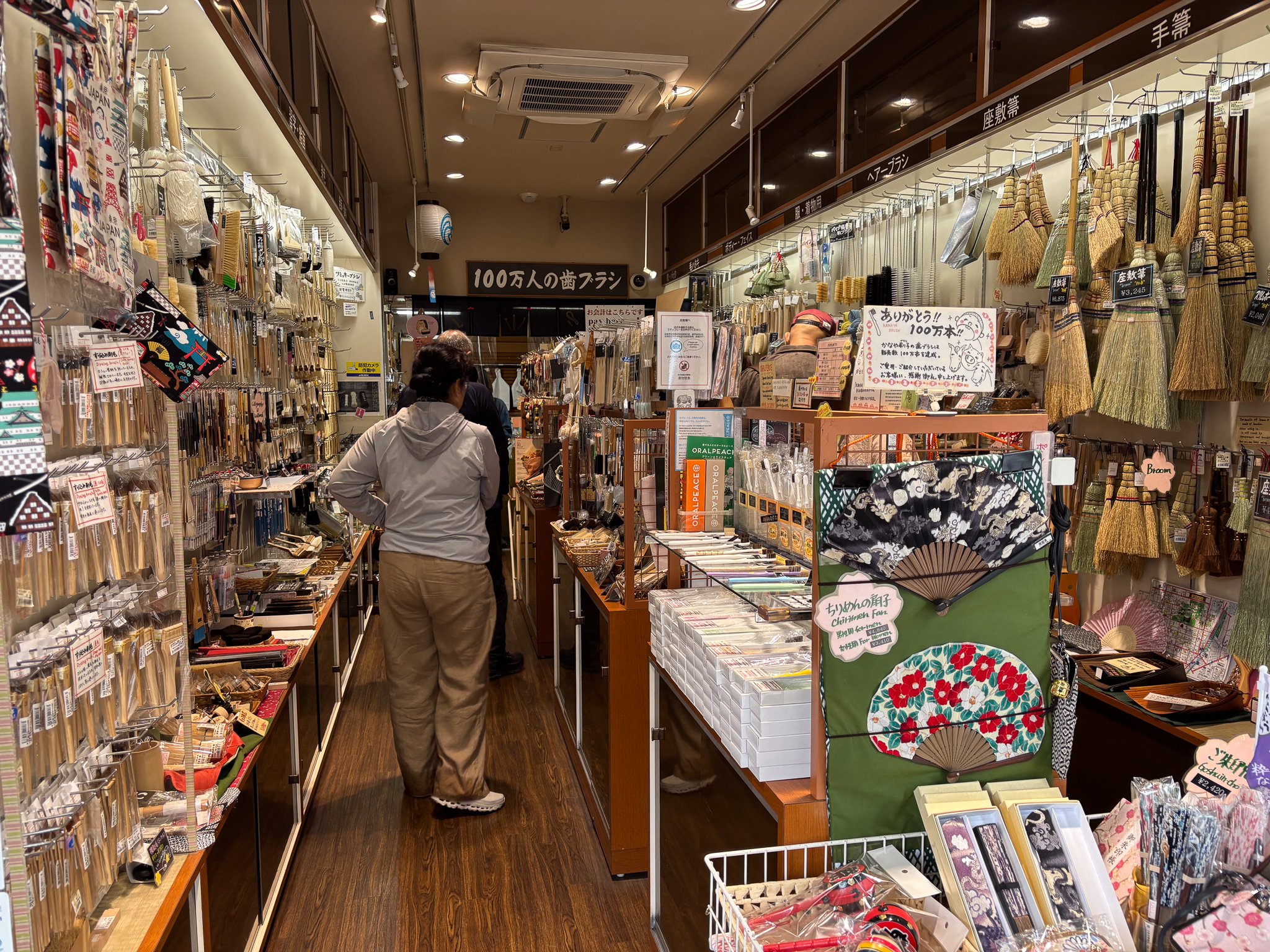
Kanaya brush shop in Asakusa, Tokyo
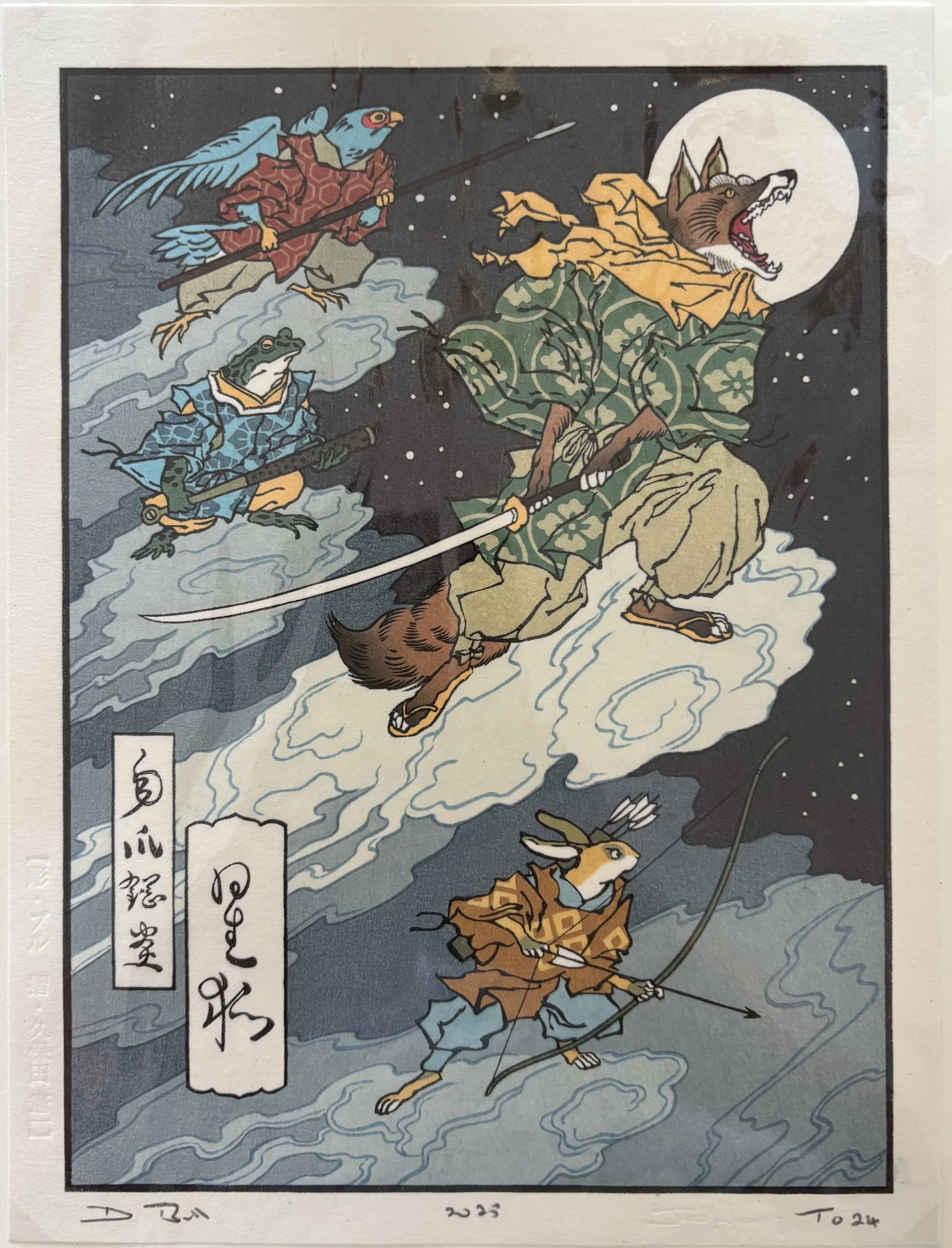
Ukiyoe Heroes, David Bull from Mokuhankan Tokyo
Next, walk 1 more minute to Mokuhankan Woodblock Print Shop. The owner is Canadian Artist, David Bull. Prepare to spend an hour or more flipping through and admiring Japanese woodblock prints. Some are ones that David carved himself—like the one I bought my son “Ukiyoe Heroes”. Others are copies of copies found at garage sales and resold here. You can find prints at any budget. Also wonderfully, David is there, barefoot, to answer your questions and chat with admirers of his Youtube videos. He is extremely friendly and welcoming. Prints seemed to pass through the shop fast as there was a steady stream of purchases during my browsing. The other shop attendants carefully pack the prints for safe travel. They also offer to mail them if desired. The shop allows photographs of everything, which is so radically generous. Even so, I happily supported the shop and purchased several prints which make me happy every time I see them on my walls.
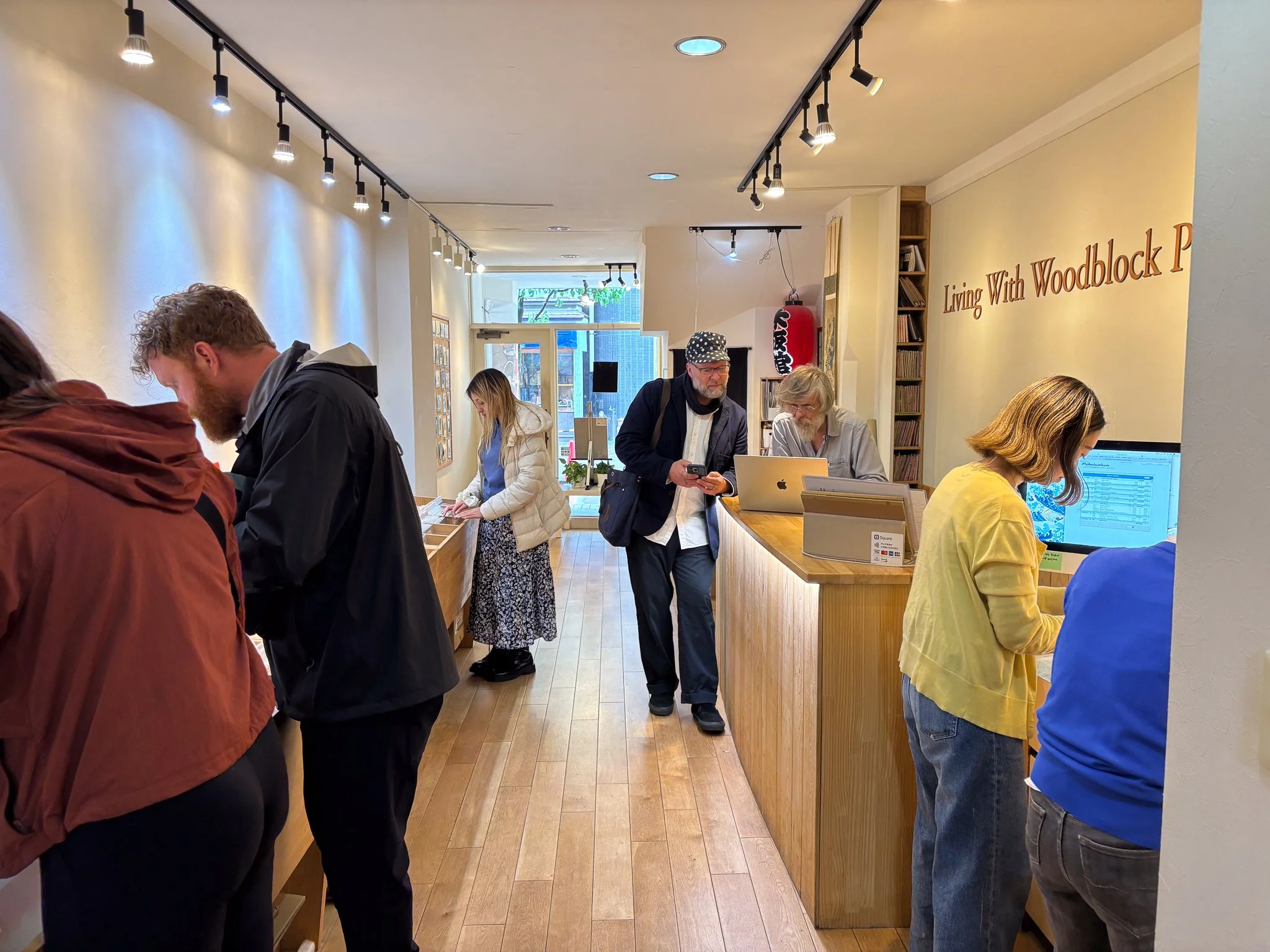
David Bull looks for woodblock prints of Japanese wood turners with Jarrod. Unfortunately they didn’t find any :(
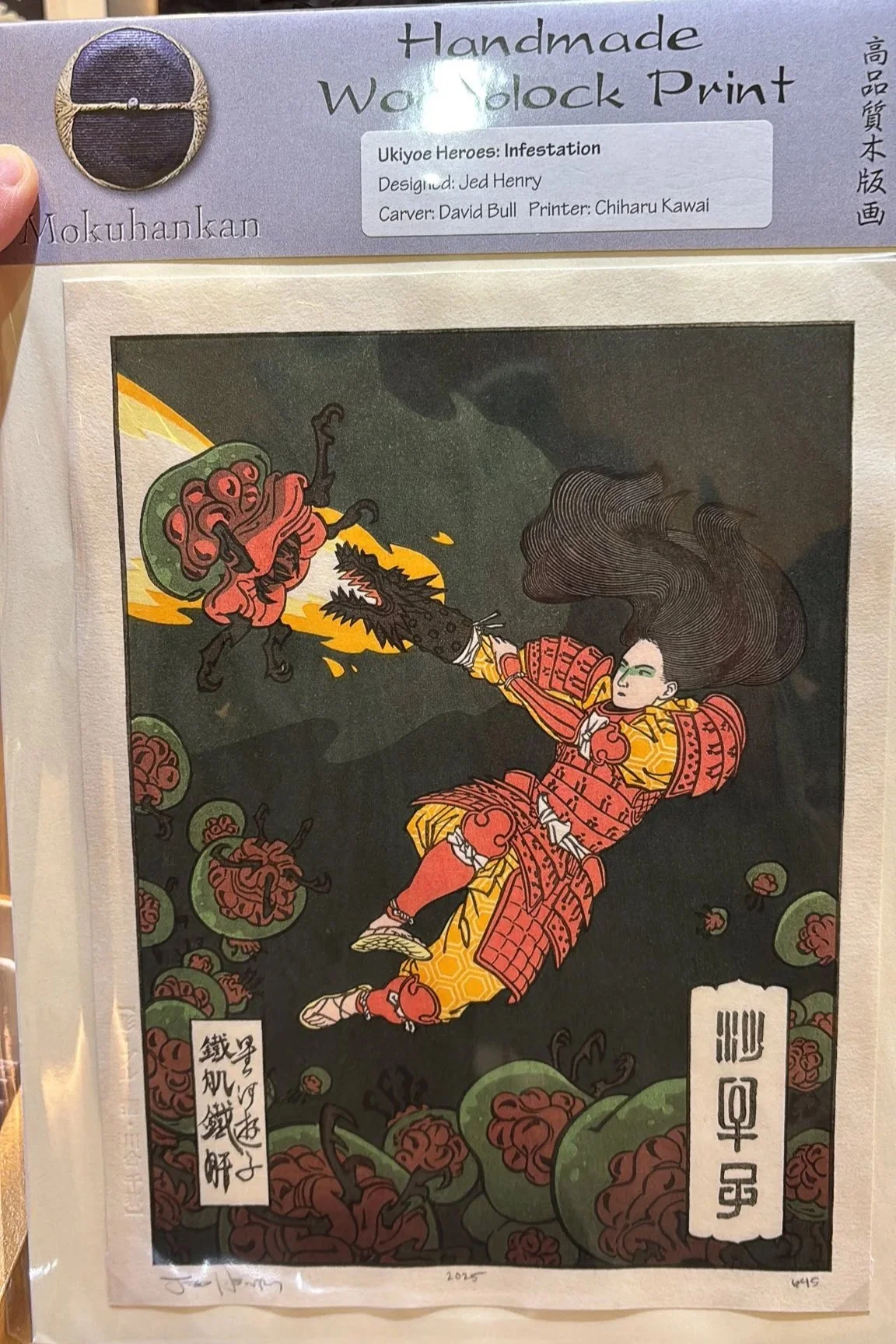
Ukiyoe Heroes, David Bull from Mokuhankan Tokyo
Next get a taxi by using Taxi Go (Japanese version of Uber). If you order your taxi that way, the payment is automatic from your card, so no cash is needed and you choose the drop off on a map, so you don’t need to explain to the driver where you are going. Go to 1basketry shop in Arakawa City 12 minutes drive away. This small shop is full to the ceiling with basket treasures from Asia, Europe, and beyond. We had a fun time talking to the owner and name dropping the weavers we admired and met at the Lichtenfels Basket Festival in 2024; Francois Deplanches, Benjamin Nauleau, Hege Aasdal, Steen Madsen… We bought a maple basket here. I would have bought more, but my luggage had tripled by the third week of our trip and Jarrod said no more!
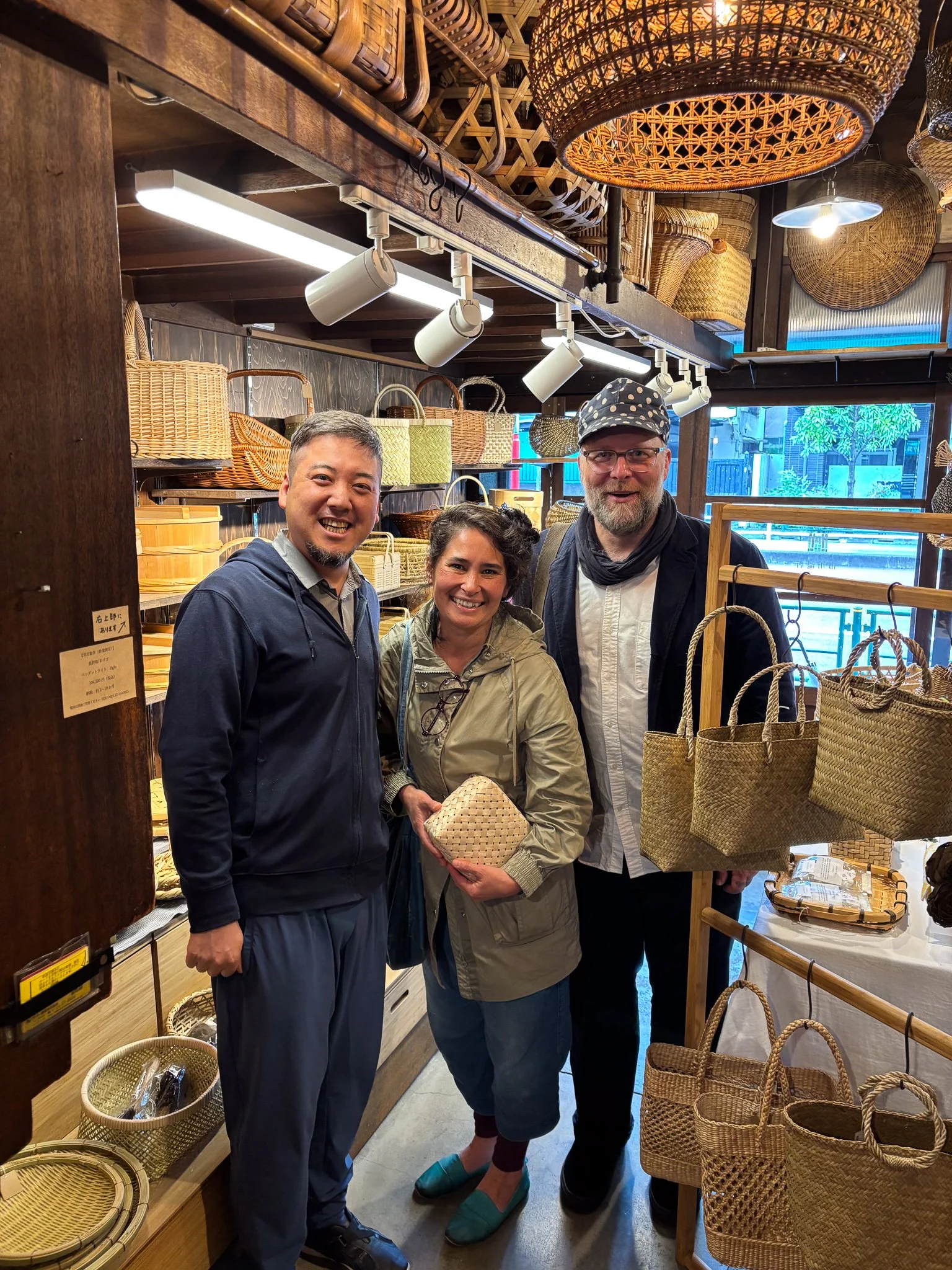
1basketry shop in Arakawa City
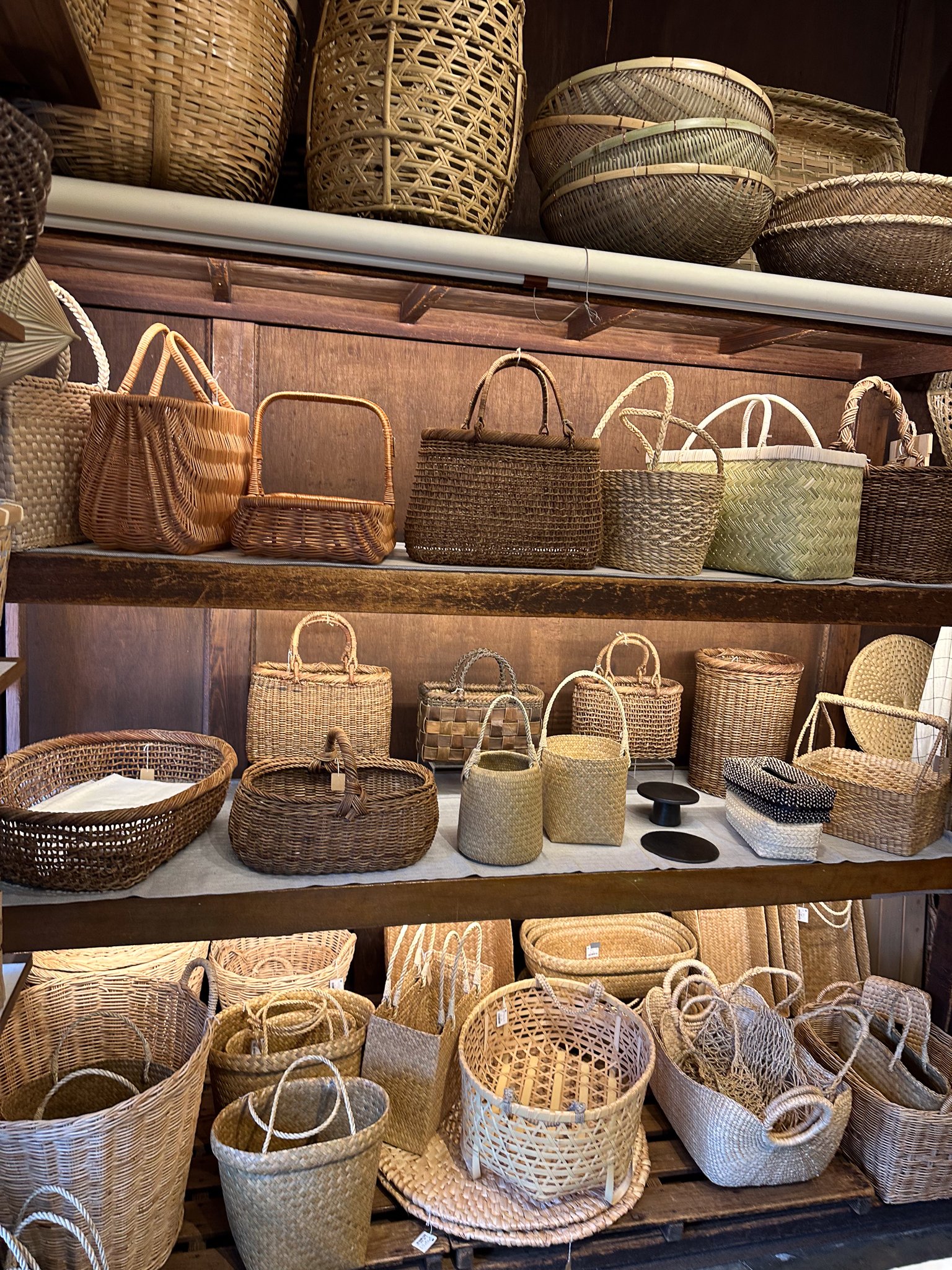
1basketry shop in Arakawa City
At this point you’ll probably need lunch. Walk 9 minutes to Unagi Obana. The reviews say the line might be long, however, unagi roasted eel, is so delicious, I am sure it’s worth the wait.
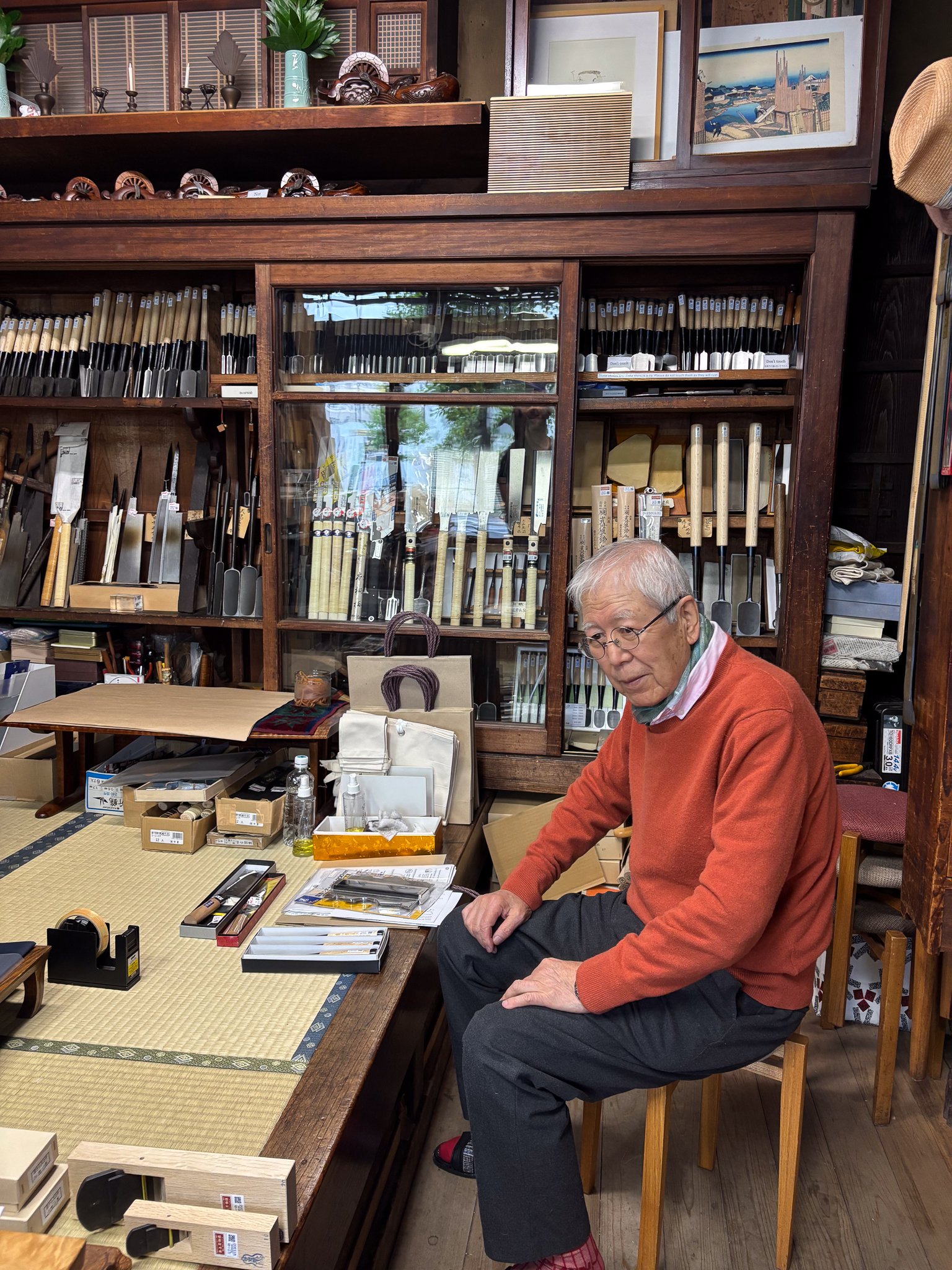
Inoue Hamono tool shop
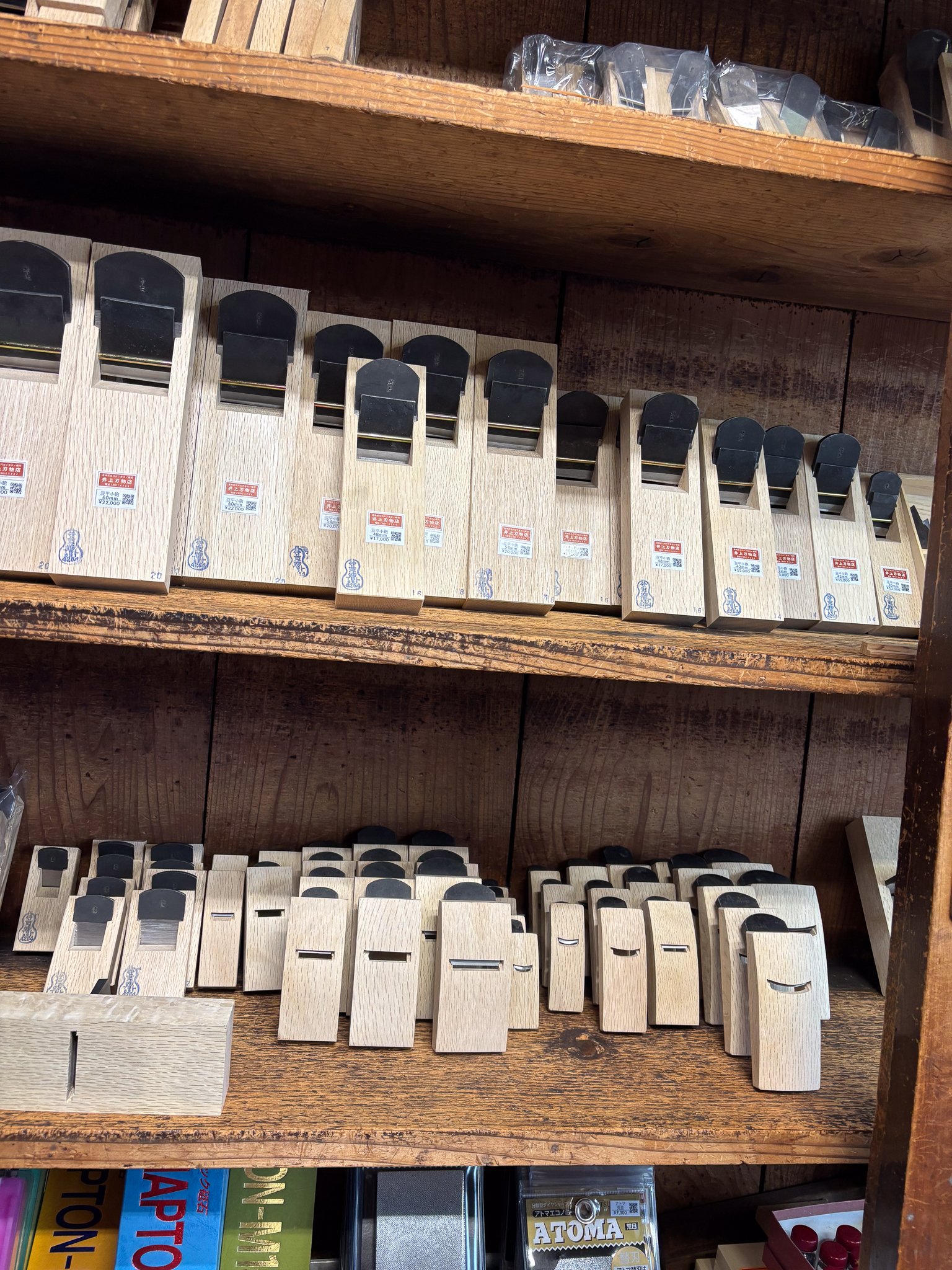
Kana block planes at Inoue Hamono tool shop
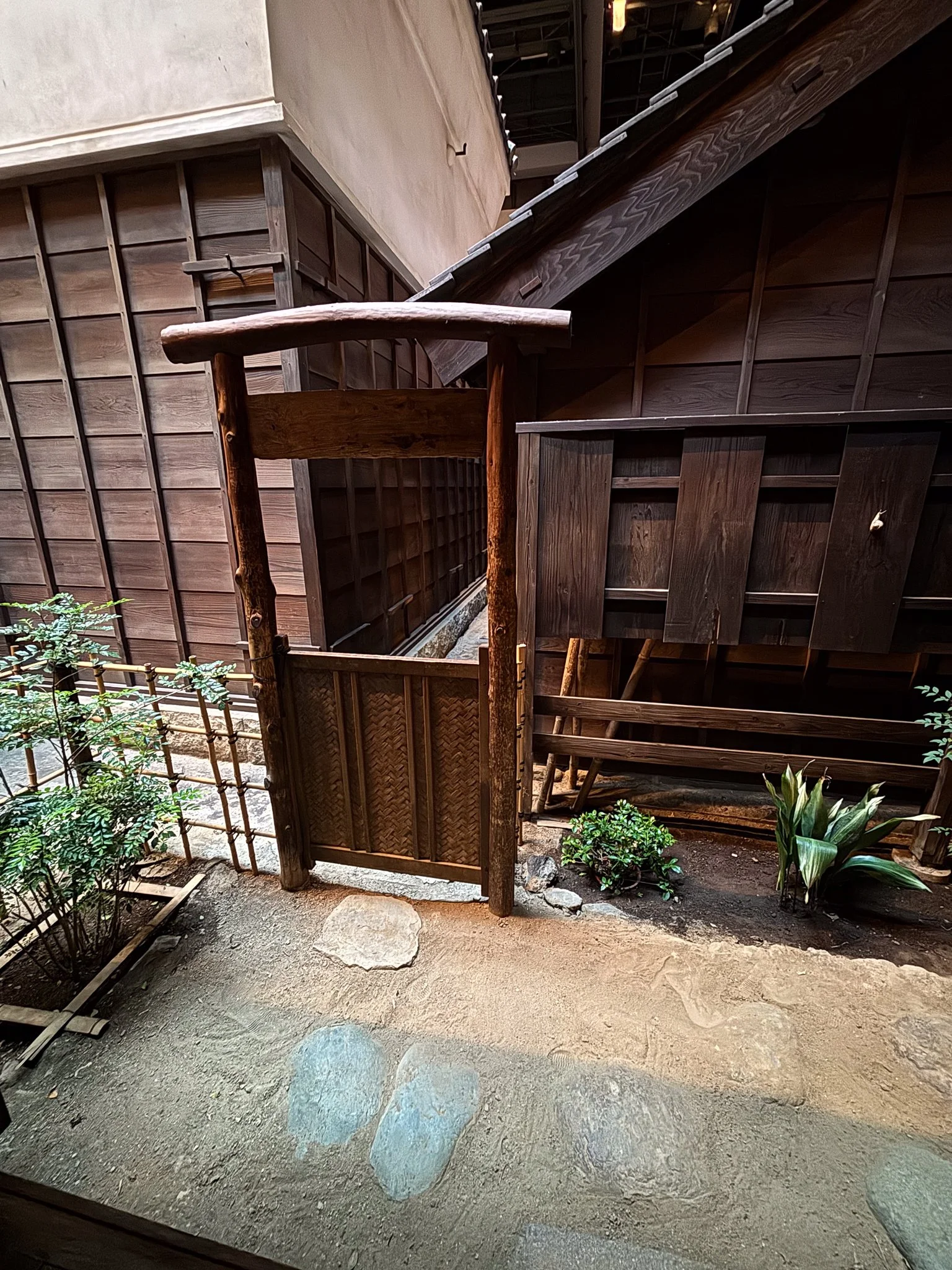
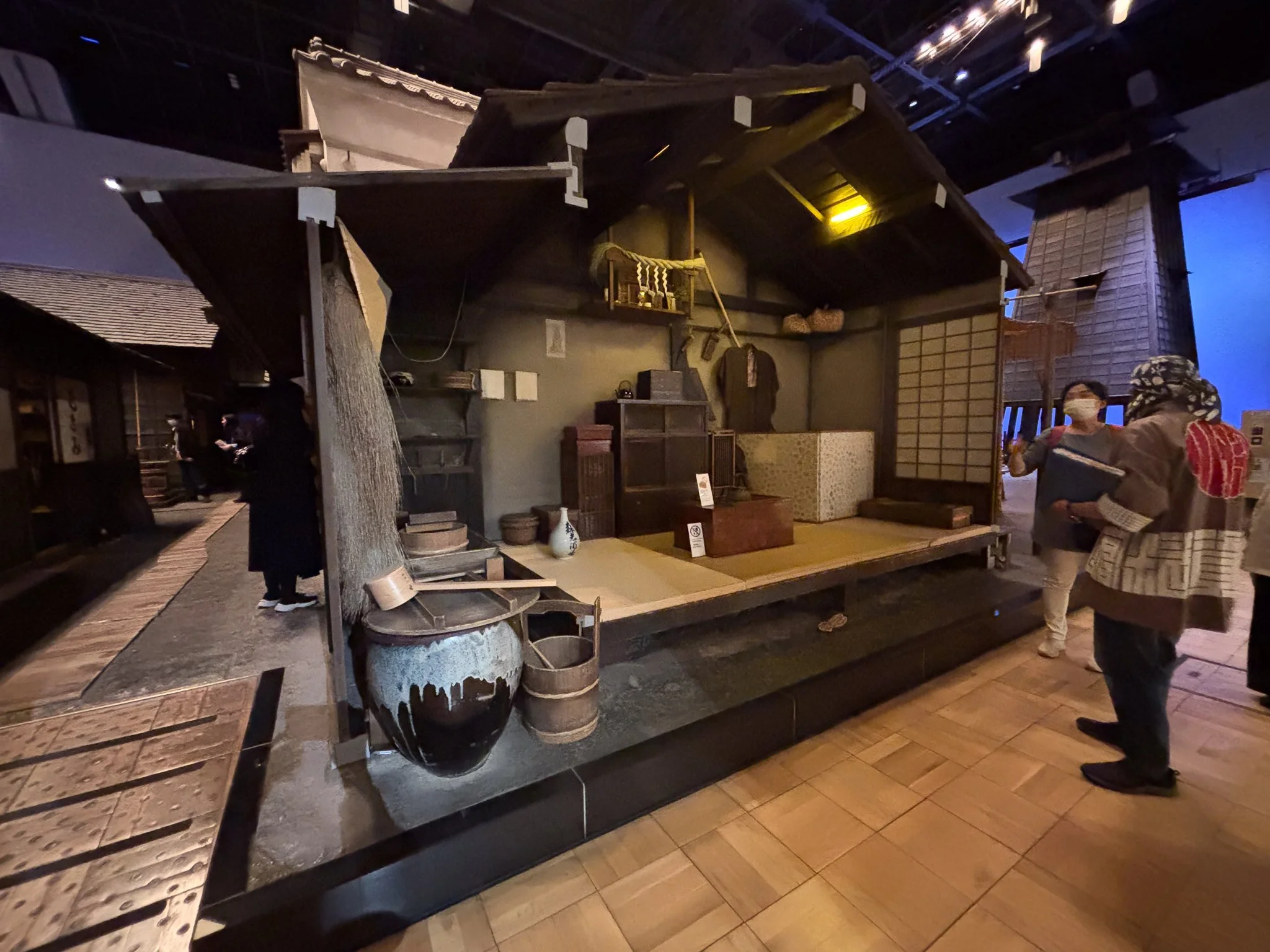
Next, get another taxi to Inoue Hamono tool shop. Here Jarrod browsed beautiful Japanese tools and blades and came out with another little kana (block plane). The owners are kind and have gifts from many many woodworkers in their shop. From here you can walk 24 minutes to the Fukagawa Edo Museum. It is a replica of an Edo period village with houses and old objects inside them. You can enter the houses and walk around the alleys or sit at the hearths and imagine what life was like then—very fun! What I especially enjoyed was seeing the handmade objects of daily life in their rightful places like cooking spoons hanging in the kitchen, baskets full of fish, woven sandals outside the door. There is even a meowing cat and a rain storm that comes on while you are there.
Next, walk 4 minutes to a super cool food and drink bar in Koto City called Tani Kore Tani which opens at 5pm. We ordered appetizers and aperitifs. The owner was an architect and lived in Brooklyn for 20+ years. The atmosphere is just right, mellow and friendly and warm. The food is delicious and high quality. The owner hung out with us for a while and chatted. If we lived in the neighborhood, we’d be there every night.
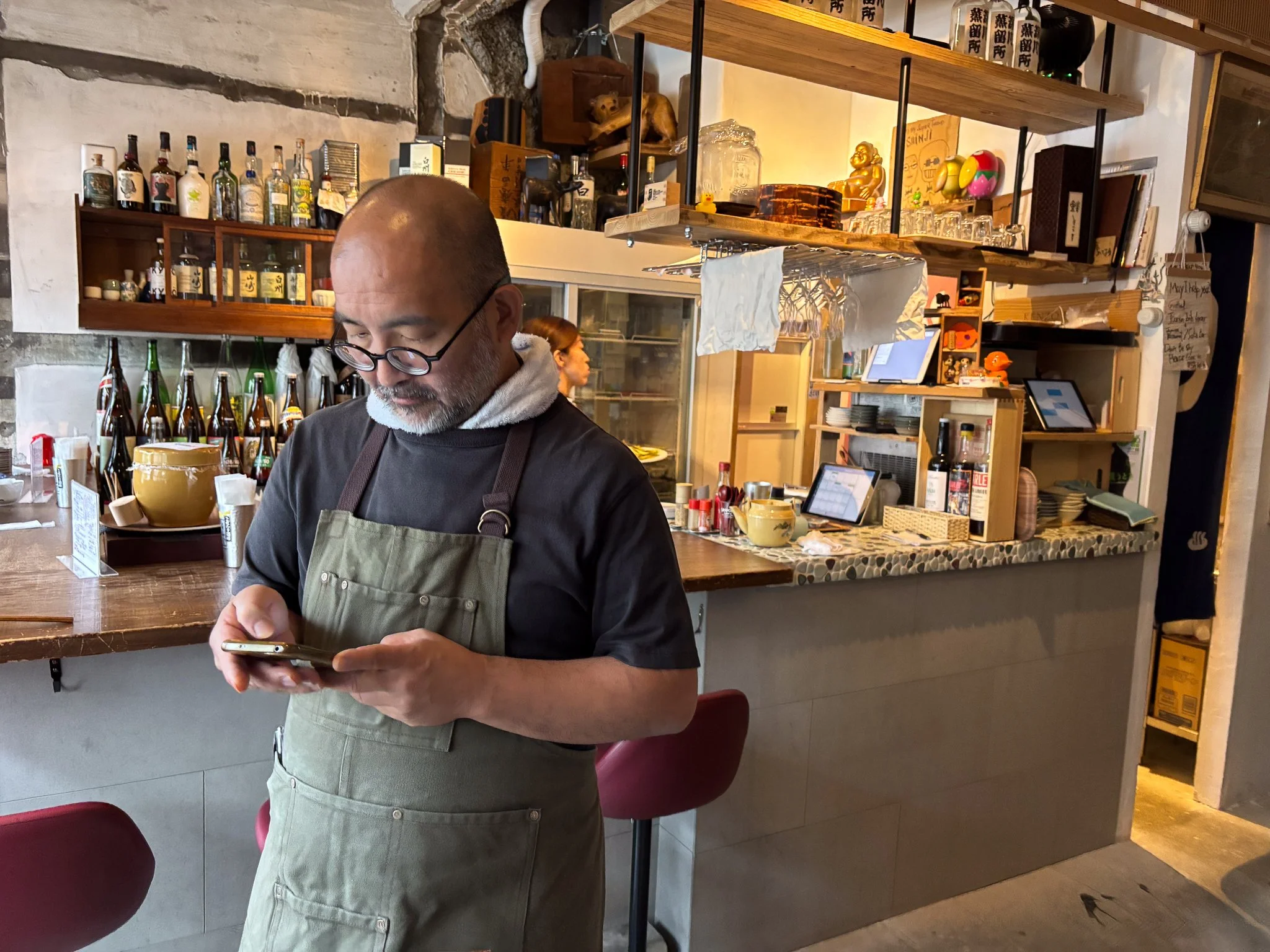
The owner of Tani Kore Tani
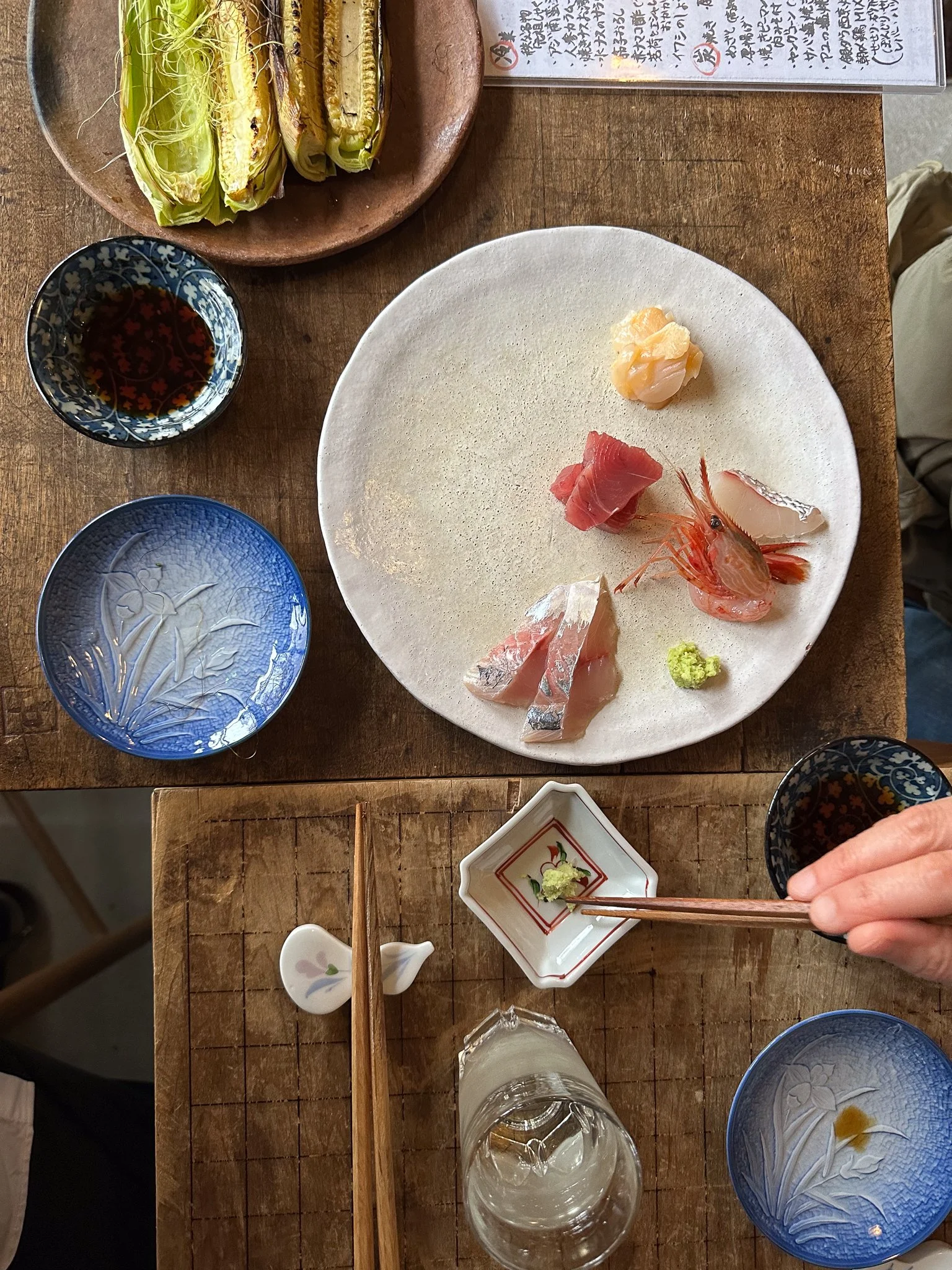
Small bites at Tani Kore Tani. The roasted corn husk was also edible!
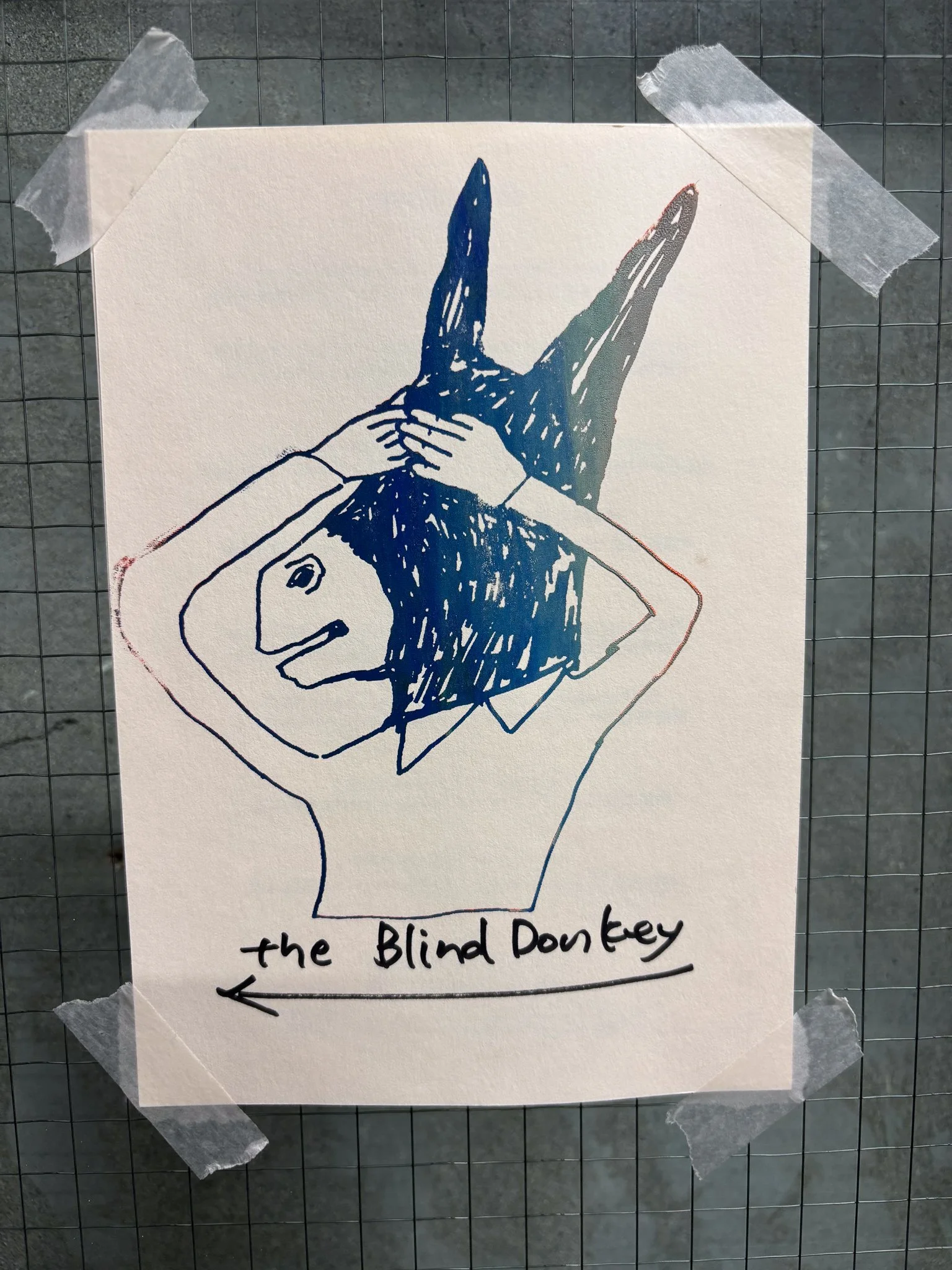
Next go to dinner at The Blind Donkey a couple blocks away. This place was started by Chez Panisse chef Jerome Waag who I knew from Tassajara Zen Mountain Center in the late 90’s. The food is exquisite and features the highest quality seasonal produce from farms all over Japan.
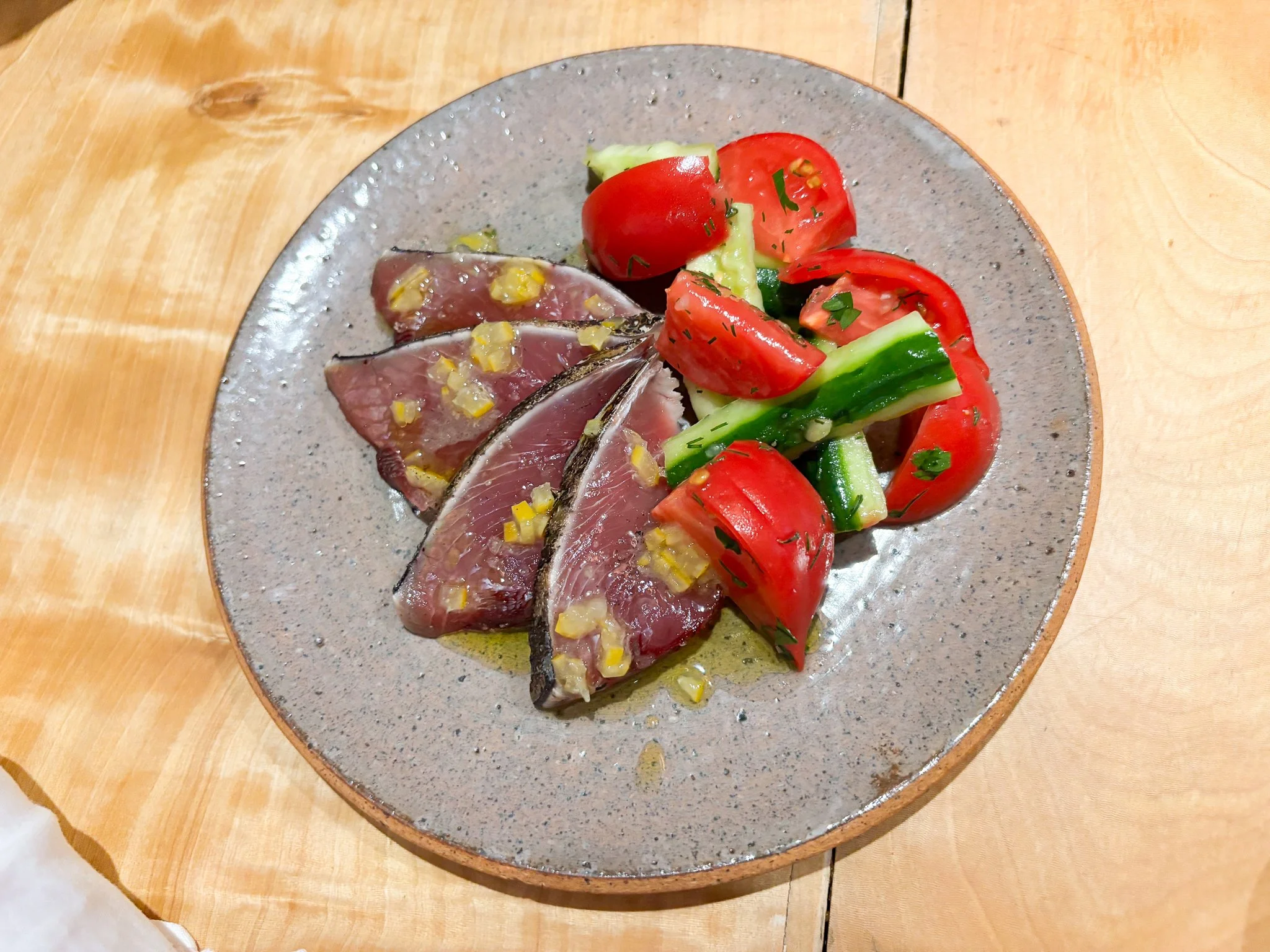
The Blind Donkey Appetizer
Or go to dinner at the Tokyo Asakusa Sarashinatenko, a soba place 1 minute walk from the hotel. This place is equally exquisite and features several different kinds of 100% buckwheat soba noodles and other amazing dishes. We asked if a certain dish was gluten free and the server looked at us puzzled and said “Everything on the menu is gluten free.” Wow! What a treat. Try the Kitsune-Yaki—a soba cake that has the texture of tofu with a super delicious sauce. Also order the appetizer platter that comes with a cat mask. We were too late to make dinner reservations, so we ended up here at lunch. Make reservations early! There are very few seats—sitting at the bar is the best view of the soba machine and the beautiful movements of the chefs preparing the food.
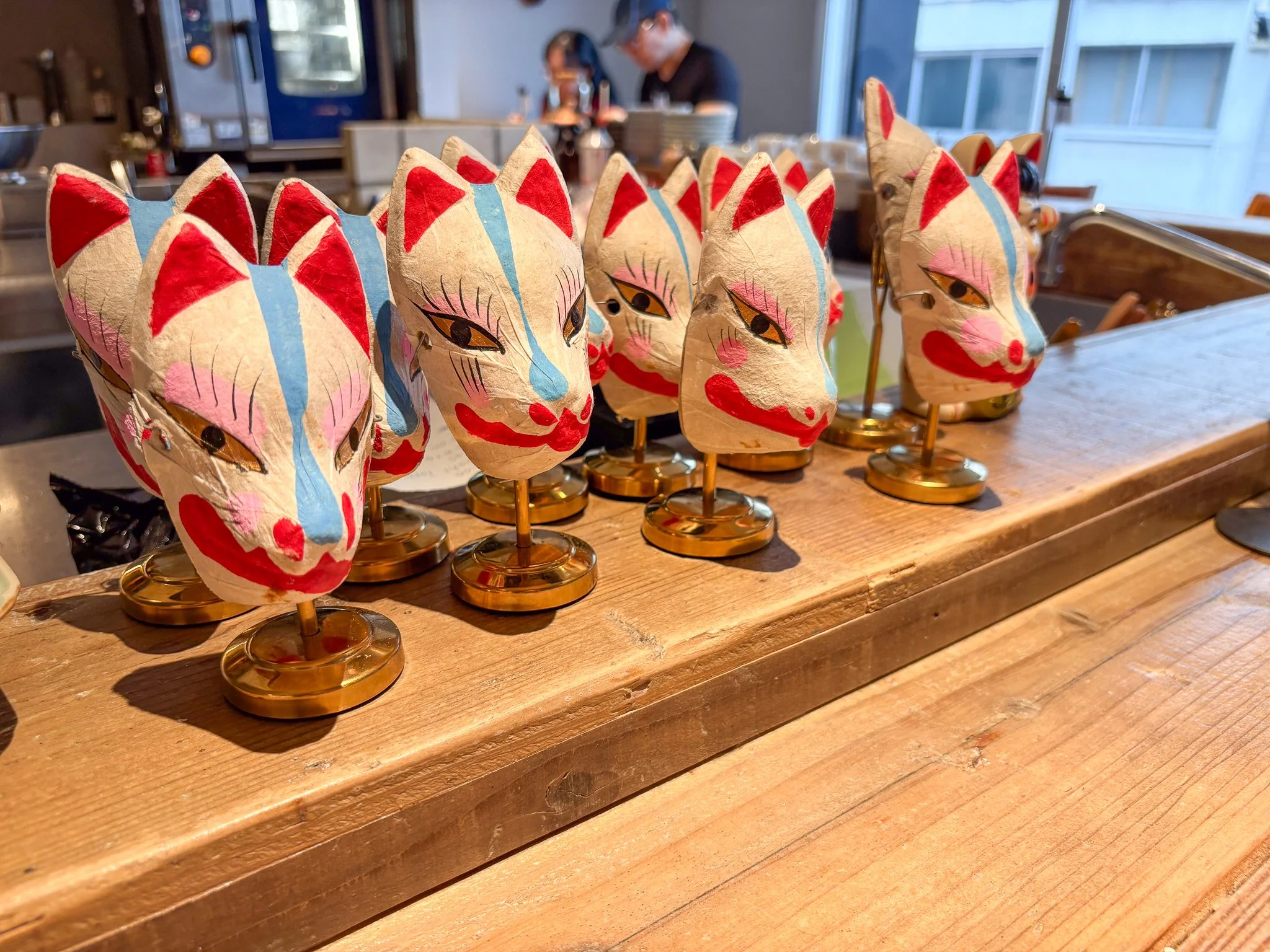
Tokyo Asakusa Sarashinatenko Cat masks for the appetizer dish
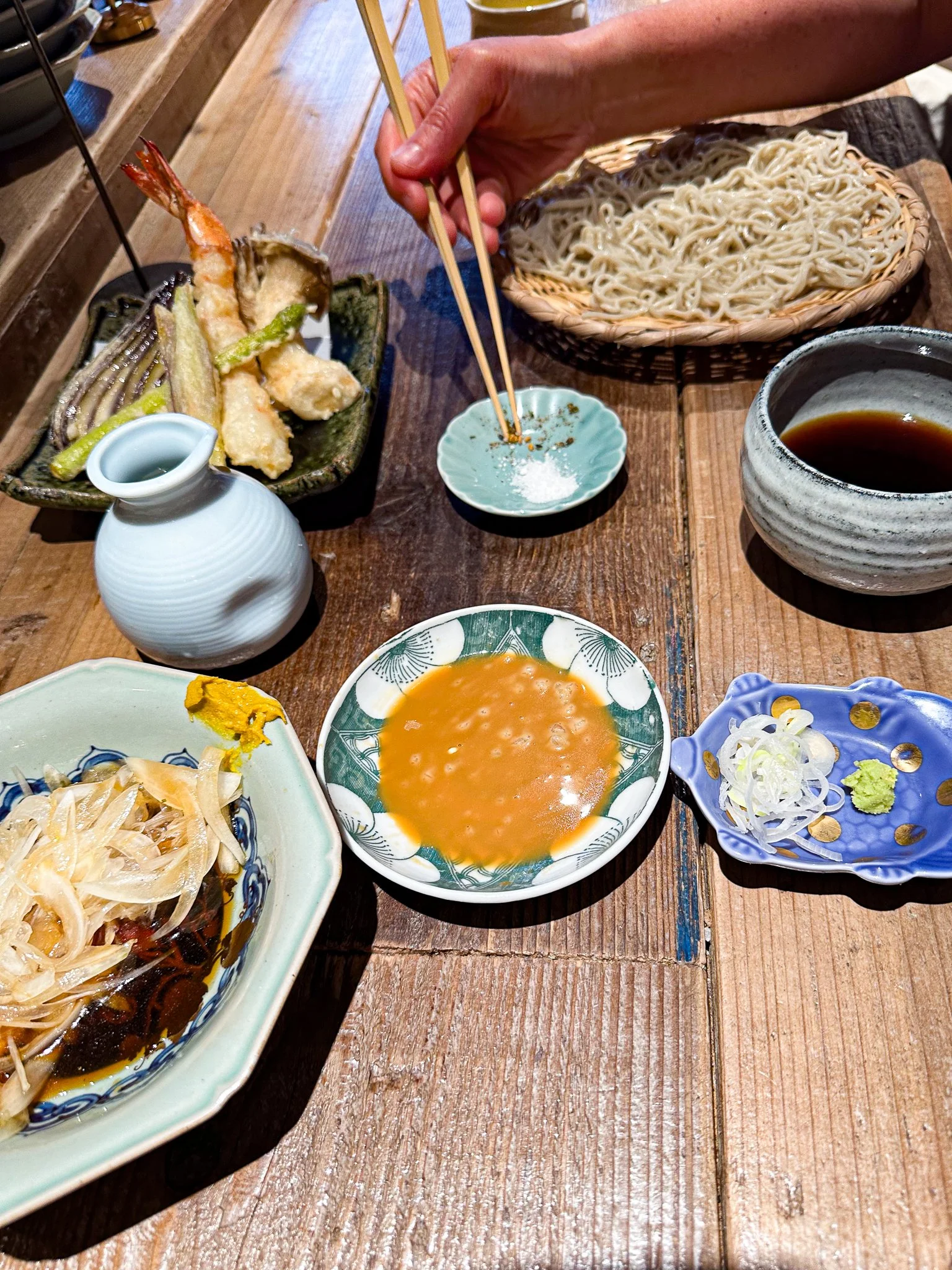
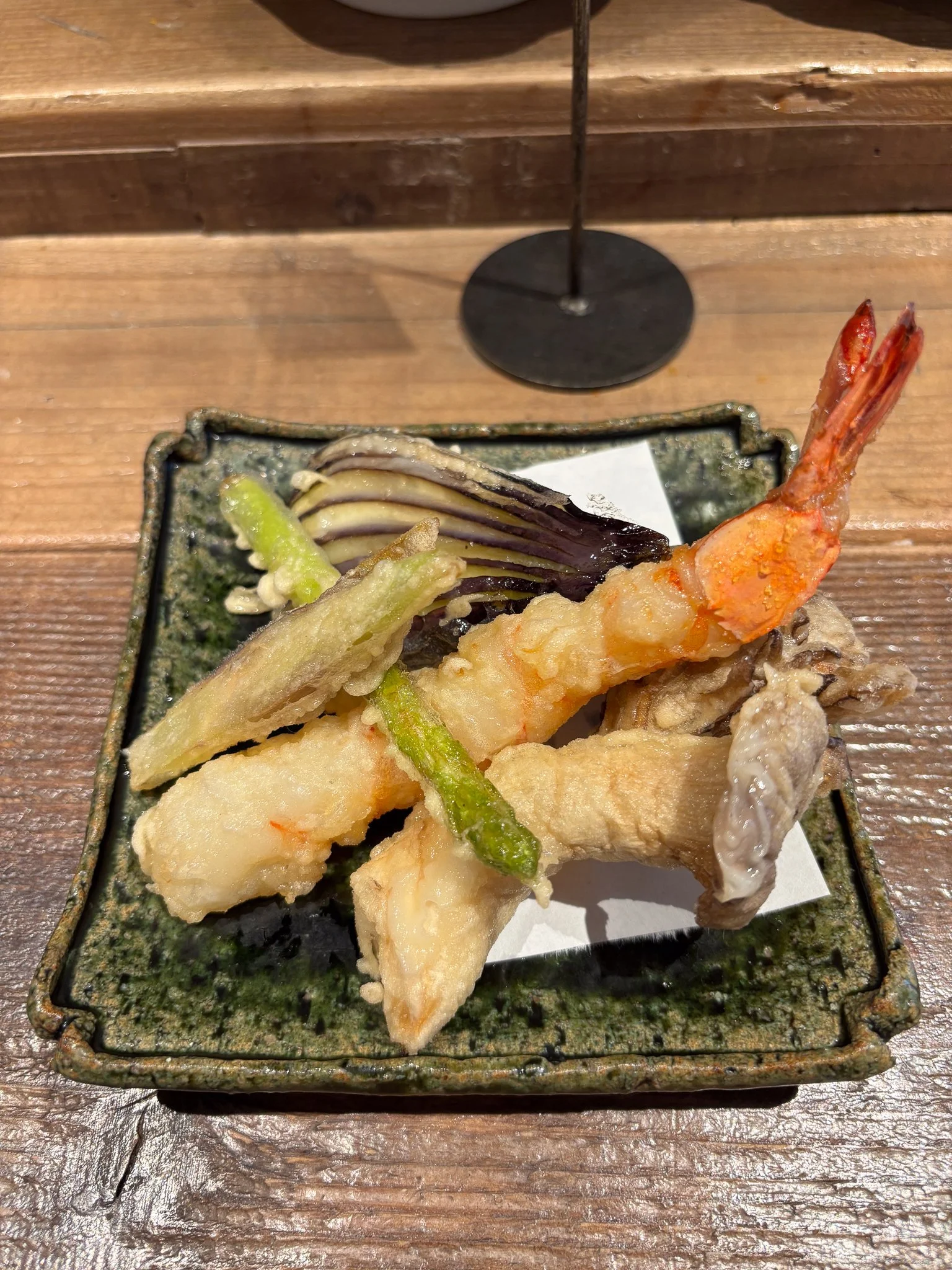
Tokyo Asakusa Sarashinatenko—Gluten Free Tempura!!!
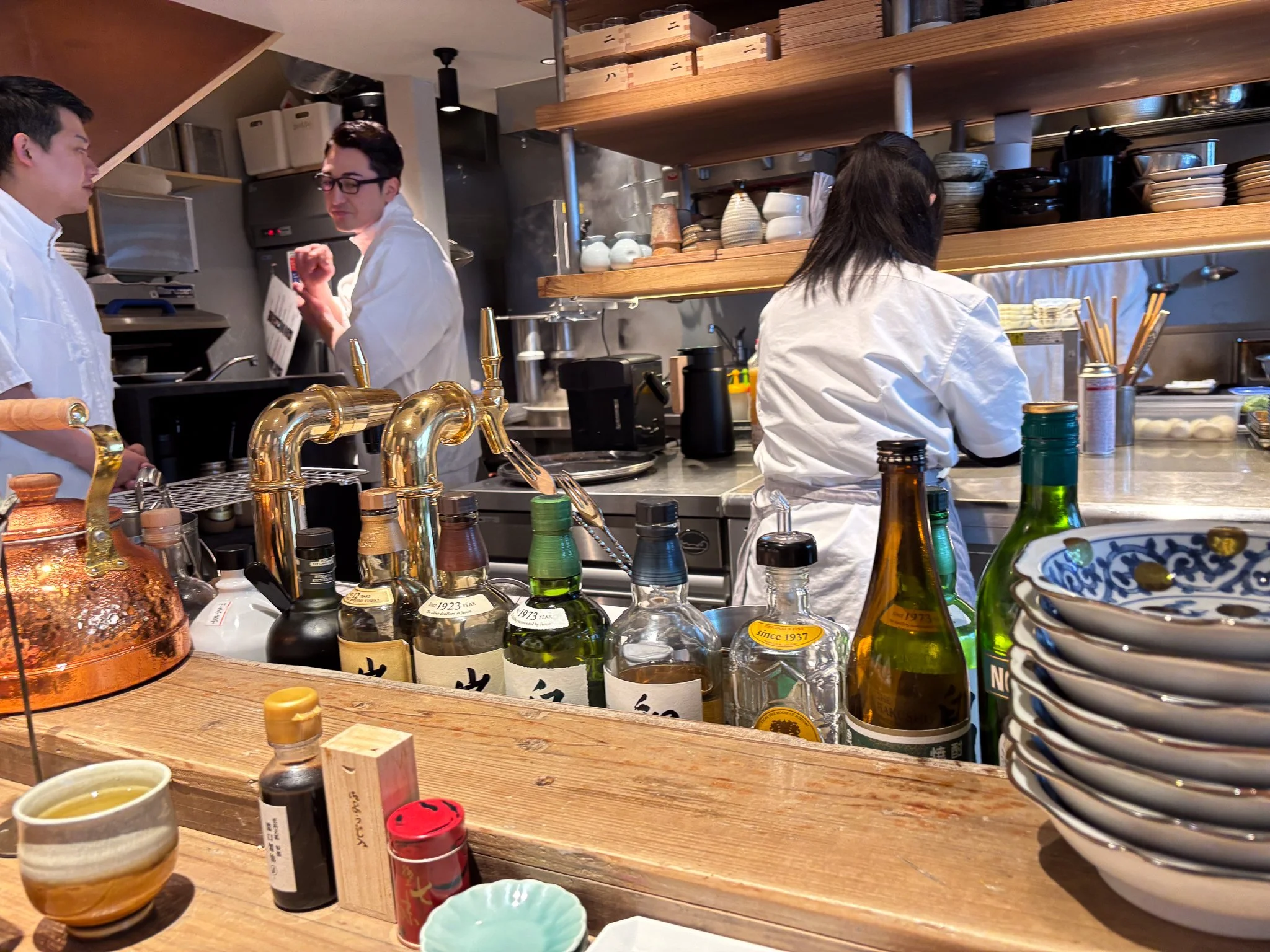
The Chef Dance at Tokyo Asakusa Sarashinatenko
After dinner walk a couple blocks from the hotel to “Donki” the local nickname for Don Quixote—an amazing chain store with multiple floors that is a combination of Walmart, Trader Joe’s, and Circus Circus Casino in Las Vegas. They are open 24 hours and are full of everything you can imagine, from preserved squid bar snacks to cologne. My favorite activity is watching the other interesting tourists. I got some souvenirs for family and friends including toe socks and Cinnamoroll platform slippers (I guess there still was room in the luggage). They have suitcases for $70 if you need one (I bought two).
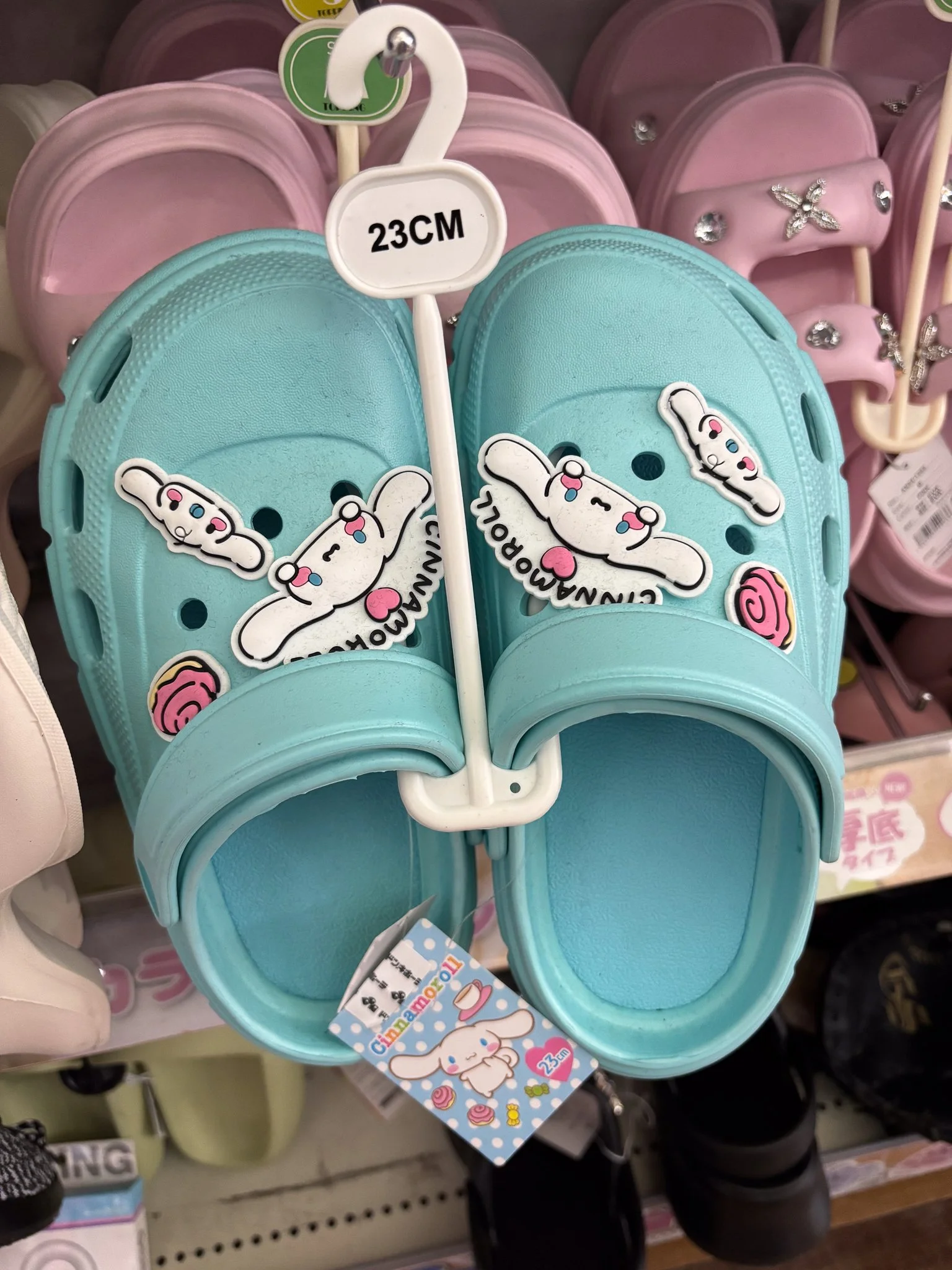
Don Quixote’s Cinnamoroll platform slippers were a hit.
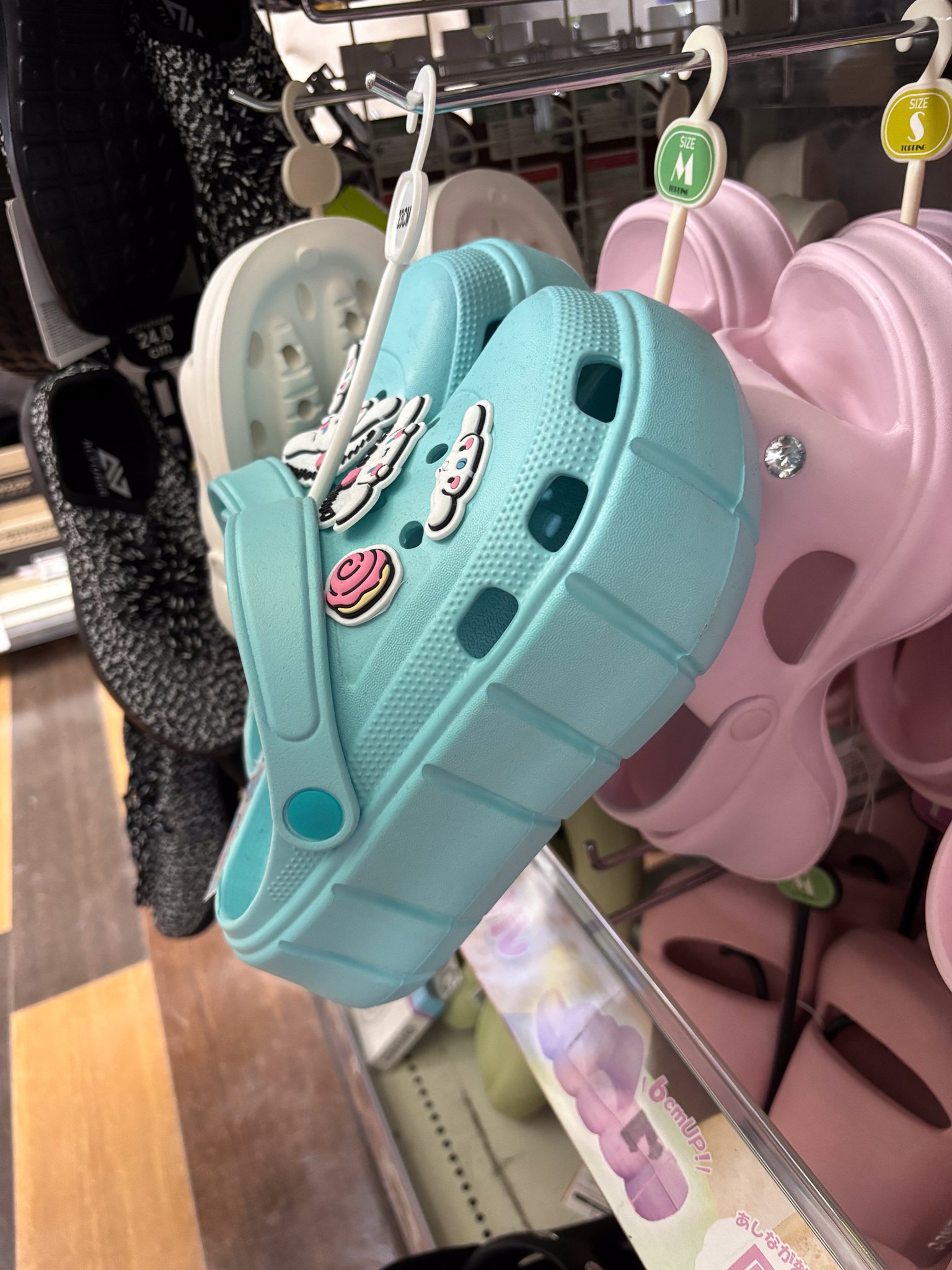
The side view shows how truly platform these slippers were. Don Quixote Asakusa
Finally return to Onyado Nono Hot Spring for a complimentary late night ramen in the dining area or go to the bottom floor, next to the free laundry room—where they have popsicles in a freezer for a snack. Take a quick soak in the hot springs and enjoy a delicious sleep in your room before a big day of travel back home or beyond.
A couple little Japan travel hacks to share:
I ordered some basic cotton work shoes from Amazon.jp and had them delivered to Onyado Nono hotel, my last stop before heading home. The hotel kindly stored my package until I arrived. I am fantasizing about my Amazon.jp purchases for next time!
Also, remember the extra luggage I acquired over the three week trip? Well, the hotel in Gifu helped me get those stuffed suitcases delivered directly to Haneda Airport weeks before my flight back home through JAL/ABC delivery service. I showed them my confirmation at the luggage pick-up desk and my bags came out completely safe and sound. This is an amazing service that you should use. It will save you the embarrassment of banging into people on Japanese public transport with your copious luggage.
If you have experiences and recommendations to share with others, please add your comments below. Happy travels!
Jazmin teaches indigo dyeing classes at Woodspirit School and has gathered a lifetime of inspiration from Japanese textiles. Follow her on instagram @loveblueindigo